Kari Lydersen: Bikers and Bear Butte
Tuesday, June 27 2006 @ 11:12 AM PDT
Contributed by: Admin
Views: 1,384
In 1857, 30,000 Sioux and Cheyenne gathered at Bear Butte in South Dakota to plan how to deal with white settlers moving in on their sacred land. Native American warriors launched attacks on wagon trains from the mountain, incidents which are now commemorated in historical plaques along the highway. In 1874, Indian fighter George Custer visited Bear Butte, two years before making his infamous "last stand" at Little Bighorn. Chief Crazy Horse also spoke there, calling on his people never to sell the land.
Bikers and Bear Butte
By Kari Lydersen
Infoshop News (news.infoshop.org)
June 27, 2006
In 1857, 30,000 Sioux and Cheyenne gathered at Bear Butte in South Dakota to plan how to deal with white settlers moving in on their sacred land. Native American warriors launched attacks on wagon trains from the mountain, incidents which are now commemorated in historical plaques along the highway. In 1874, Indian fighter George Custer visited Bear Butte, two years before making his infamous "last stand" at Little Bighorn. Chief Crazy Horse also spoke there, calling on his people never to sell the land.
The windswept mountain is sacred to about 30 regional Native American tribes, a spiritual respite for vision quests, healing, learning and praying. And they are still fighting to defend it from white men. Now instead of pioneers in covered wagons, their nemesis is a biker turned developer who is proposing one of the world’s largest biker bars at the foot of Bear Butte.
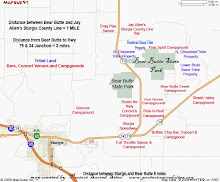
For about two weeks every summer, the stark hills and mesas of Bear Butte rise above an incongruous backdrop: hundreds of thousands of bikers from around the US and Europe attending the annual Sturgis Motorcycle Rally. Bikers camp at the Buffalo Chip campground about four miles from the mountain, drink beer and cheer rock groups like Lynyrd Skynyrd.
Native Americans in the area are offended by the drinking and debauchery at the foot of their sacred mountain, but they have grudgingly tolerated the motorcycle rally for the about 60 years it has been going on. Now they are furious that an Arizona biker and developer wants to turn the biker party scene into a year-round presence, with a sprawling biker bar and campground within two miles of Bear Butte on it’s currently undeveloped north side.
"We’re trying to defend this mountain that’s sacred to our people for many generations, but we’re fighting against millionaire developers," said Victorio Camp, 31, a Pine Ridge reservation resident who grew up doing vision quests at Bear Butte. "This mountain is a place where spirituality comes from. It’s a place where we gather medicines and do ceremonies. It’s hard to go up there and pray when you have 100,000 motorcycles driving by."
Developer Jay Allen started out as a participant and leather vendor at the Sturgis rally. He was a regular at the Broken Spoke Saloon in a former Sturgis lumberyard. He ended up buying the bar in 1993, and then opened a chain of Broken Spokes in Florida, New Hampshire and South Carolina. For his new 600-acre development, he made clumsy efforts to reach out to Native Americans. He announced plans to call the complex "Sacred Ground," and feature an 80-foot statue of an Indian, a tipi village and an "educational center" about Native Americans – many bikers do feel an affinity with Native Americans and want to learn more about their culture. (Some bikers also oppose Allen’s development, and testified against his application for a liquor license at a public hearing.)
Local tribes did not appreciate Allen’s gesture, however, seeing it as a case of adding insult to injury, especially considering the history of the area.
Bear Butte is part of the Black Hills which the Lakota feel were stolen from them by the US government after the Treaty of Ft. Laramie in 1868. In 1923 they filed a lawsuit charging the land was seized without just compensation, and the suit slowly made its way through the courts all the way up to a US Supreme Court decision in 1980 in which the Justices upheld a lower court decision awarding the Lakota more than $100 million for the land. Tribes have refused to accept the money, instead continuing to demand that the land be returned.
Last fall the foundation was laid for Allen’s 22,500 foot bar, a huge asphalt parking lot and a 30,000-person-plus music venue he has said will serve "the biggest music acts known to mankind." (Allen could not be reached for comment, and Sturgis rally organizers declined to comment).
Meanwhile another developer has applied for permits for another bar and campground nearby. And venues for the summer rally have encroached closer and closer to the mountain, which is mostly a state park with areas reserved for Native ceremonies. Defenders of Bear Butte are calling for at least a five mile buffer zone between the mountain and new development.
Organizers of the Sturgis biker rally, which is no doubt a crucial part of the working class town’s economy, declined to comment on the biker bar plans. A county commissioner said that since Allen owns the land and his plans meet local codes, there is no reason for the government to interfere.
Camp is particularly concerned that the development is on the north of Bear Butte, whereas the rally festivities are mainly on the opposite side around downtown Sturgis.
"All this traffic from Sturgis will be coming by now," he said. "We’re worried about the animals, the wildlife."
Native Americans also don’t like the fact that drinking alcohol will be allowed and probably rampant at the music venue and campground.
"They’ll all be drunk, looking at our mountain, and they won’t see it as such a beautiful, pure place; they don’t know the majesticness and power the place has," said Camp. "They walk around naked and drink and ride bikes; to us that’s very disrespectful."
"You wouldn’t have this in front of a church, synagogue or hospital," added Lakota activist Debra White Plume. "That’s what Bear Butte is like to us."
Different tribes have formed the Bear Butte International Alliance to oppose the development, and petitioned the county to put Allen’s liquor license up for a county-wide vote. (Their request was denied). In late spring, 27 Cheyenne teenagers ran a two-day, 190-mile relay from their reservation in Montana to Bear Butte in protest. Tribal members plan to keep fighting Allen’s plan and other development proposals in various ways. Within the past few years their lobbying has helped defeat other development proposals, including a shooting range.
"We just want to hold on to what little we have left at this mountain," said Camp. "As Lakota it is our duty to protect the earth. We’re just trying to have people understand why it’s such a sacred place. But it feels like our rights are being stepped on again, the same thing that’s been happening since Columbus came."
Native Americans from around the country will come to Bear Butte in August for a summit on protecting sacred sites. White Plume said they are planning protest actions in Sturgis, and they plan to contact musicians who have played or might consider playing at the rally or new arena.
"We see it as a desecration not only of a mountain but of our way of life," she said. "This is a genocidal issue to us. If they kill this mountain, they kill our way of life."
---------
Kari Lydersen is a freelance writer whose work has appeared in the Washington Post, In These Times, LiP Magazine, Clamor, and The New Standard.
http://www.infoshop.org/inews/article.php?story=2006bear_butte
Tuesday, June 27, 2006


Friday, June 23, 2006
Biker Mecca on Sacred Ground
Biker Mecca on Sacred Ground
By Anne Keala Kelly
June 23, 2006
Sturgis, South Dakota, is a town of about 6,500 people, but come August the population explodes, as half a million bikers and motorcycle enthusiasts ride in like cowboys, clad in leather vests and bandannas for the annual Sturgis Motorcycle Rally. This year's event, however, promises to be met with resistance from the area's original inhabitants and other First Nation peoples from across the continent. They are protesting not only the onslaught of bikers but also a development at the base of a sacred hill outside of Sturgis called Bear Butte.
Anne Keala Kelly: Native American activists are braced for a tense summer, as a motorcycling entrepreneur goes forward with plans for a resort that will draw hundreds of thousands of bikers to the sacred site of Bear Butte.
"I have a hard time in the white man's way. They pray to this guy called God, but he's gold. It's all about the almighty dollar. Their priorities are money," said Alexander White Plume in a phone interview from his home in Manderson, South Dakota. White Plume is acting president of the Oglala Sioux Tribe, and he, along with hundreds of others, organized protests and spoke at recent public hearings over whether or not a liquor license should be given to Arizona businessman Jay Allen, who plans to build a 600-acre biker extravaganza adjacent to Bear Butte.
Allen operates an interstate chain of four biker bars called Broken Spoke Saloon, including one in Sturgis, which bills itself as the largest biker bar in the world.
Meade County Commissioners voted unanimously in April to grant a beer and malt beverage license to Allen for this new saloon in his chain, and then voted in June to allow transfer of a liquor license to the venue.
The original name of Allen's project was Sacred Grounds, and until Lakota and other nations raised objections, Allen intended to erect on the site an eighty-foot-high statue of a Native person praying. From Allen's perspective, he has treated the indigenous population fairly, noting through a spokeswoman that local tribes had passed up two opportunities to purchase the land he ultimately acquired.
At issue on both sides of this argument over the proposed development is more than expropriation of the intellectual property of indigenous peoples. It is a reminder of the vast cultural differences that exist between First Nation peoples and those who are drawn to what once was their tribal land.
One only needs to read Article 1 of the 1868 Treaty of Fort Laramie and compare it with what has happened over time to understand the profound conflict between the two competing paradigms: "From this day forward all war between the parties to this agreement shall forever cease. The Government of the United States desires peace, and its honor is hereby pledged to keep it. The Indians desire peace, and they now pledge their honor to maintain it."
Enacted by Congress, the treaty codified the Sioux Nations' ownership of the Black Hills. But the treaty's opening words, "From this day forward," really only meant for the next six years, because in 1874 General George Custer and some nineteenth-century entrepreneurs, known back then as miners, breached the treaty and found gold in the Black Hills, reigniting what are called the Indian wars. Eventually those events led to white settlers hunting down Natives and either forcing them onto reservations or, as happened at Wounded Knee, disarming them and then murdering them.
Despite the dispossession of Native people and erosion of their sovereignty, the Lakota, Arapahoe and Cheyenne still go to Bear Butte to practice their religious ways. Scores of other nations have maintained connections to the butte since ancient times, making the journey there to pray much the way Muslims make the pilgrimage to Mecca. Lakota and other First Nations people aren't the only ones opposed to Allen's plans to develop Bear Butte as a haven for bikers. Some white ranchers and business owners say the Sturgis biker rally has gotten out of hand and have joined coalitions such as the Bear Butte International Alliance, which are planning to conduct civil disobedience training. Meade County, where Sturgis is located, boasts a population of only 25,000, but every year locals brace themselves for Rally Week because as many as 650,000 bikers have poured into Sturgis and the surrounding area.
Opponents of the Bear Butte development are expecting as many as 10,000 people to stand with them in solidarity to protest this intrusion on their land. When asked whether or not he believes there will be clashes between protesters and bikers, Alexander White Plume said, "We can't defend Bear Butte violently because it is a sacred site. But our younger generation is talking about direct action."
Meanwhile, Allen's development is taking shape. He has announced plans to include a rodeo arena on the site by 2008, and he has said that although he respects the Native people, he has the right to conduct business. The state of South Dakota agrees with him, because none of the legal or moral objections put forth have held sway with legislators who earlier this year rejected legislation to create a four-mile buffer around Bear Butte. Hundreds of First Nation peoples traveled more than 200 miles to attend hearings and testify against granting the liquor license. But Bob Mallow, one of the five Meade County Commissioners who voted in favor of Allen's request, said in a phone interview that none of the area's residents spoke out against it.
"If there's nothing there, we're talking about two and a half miles from Bear Butte," said Mallow. "The location is fine with us. It's a municipality. If you have a church down the street two blocks, that makes sense, but this distance seems like enough."
Allen, who has traveled to Sturgis annually since 1986, said he visits the butte every day during the rally and added that he wants to share the "magic of our precious 600 acres with not just the Native Americans but with anyone open to experiencing something greater than the common rally experiences."
Even though county and state lawmakers have green-lighted the project, the First Nations peoples are undaunted in their quest to protect this religious site. Bear Butte is one of the last remaining undeveloped sacred sites in the United States.
"We want to keep it that way," said White Plume. "Leave it in its original form. It's where we go to do our vision quest. We do ceremonies that need silence. Putting a bar and concert hall there would be like us holding a powwow outside a synagogue when they're praying."
http://www.thenation.com/doc/20060710/kelly
By Anne Keala Kelly
June 23, 2006
Sturgis, South Dakota, is a town of about 6,500 people, but come August the population explodes, as half a million bikers and motorcycle enthusiasts ride in like cowboys, clad in leather vests and bandannas for the annual Sturgis Motorcycle Rally. This year's event, however, promises to be met with resistance from the area's original inhabitants and other First Nation peoples from across the continent. They are protesting not only the onslaught of bikers but also a development at the base of a sacred hill outside of Sturgis called Bear Butte.
Anne Keala Kelly: Native American activists are braced for a tense summer, as a motorcycling entrepreneur goes forward with plans for a resort that will draw hundreds of thousands of bikers to the sacred site of Bear Butte.
"I have a hard time in the white man's way. They pray to this guy called God, but he's gold. It's all about the almighty dollar. Their priorities are money," said Alexander White Plume in a phone interview from his home in Manderson, South Dakota. White Plume is acting president of the Oglala Sioux Tribe, and he, along with hundreds of others, organized protests and spoke at recent public hearings over whether or not a liquor license should be given to Arizona businessman Jay Allen, who plans to build a 600-acre biker extravaganza adjacent to Bear Butte.
Allen operates an interstate chain of four biker bars called Broken Spoke Saloon, including one in Sturgis, which bills itself as the largest biker bar in the world.
Meade County Commissioners voted unanimously in April to grant a beer and malt beverage license to Allen for this new saloon in his chain, and then voted in June to allow transfer of a liquor license to the venue.
The original name of Allen's project was Sacred Grounds, and until Lakota and other nations raised objections, Allen intended to erect on the site an eighty-foot-high statue of a Native person praying. From Allen's perspective, he has treated the indigenous population fairly, noting through a spokeswoman that local tribes had passed up two opportunities to purchase the land he ultimately acquired.
At issue on both sides of this argument over the proposed development is more than expropriation of the intellectual property of indigenous peoples. It is a reminder of the vast cultural differences that exist between First Nation peoples and those who are drawn to what once was their tribal land.
One only needs to read Article 1 of the 1868 Treaty of Fort Laramie and compare it with what has happened over time to understand the profound conflict between the two competing paradigms: "From this day forward all war between the parties to this agreement shall forever cease. The Government of the United States desires peace, and its honor is hereby pledged to keep it. The Indians desire peace, and they now pledge their honor to maintain it."
Enacted by Congress, the treaty codified the Sioux Nations' ownership of the Black Hills. But the treaty's opening words, "From this day forward," really only meant for the next six years, because in 1874 General George Custer and some nineteenth-century entrepreneurs, known back then as miners, breached the treaty and found gold in the Black Hills, reigniting what are called the Indian wars. Eventually those events led to white settlers hunting down Natives and either forcing them onto reservations or, as happened at Wounded Knee, disarming them and then murdering them.
Despite the dispossession of Native people and erosion of their sovereignty, the Lakota, Arapahoe and Cheyenne still go to Bear Butte to practice their religious ways. Scores of other nations have maintained connections to the butte since ancient times, making the journey there to pray much the way Muslims make the pilgrimage to Mecca. Lakota and other First Nations people aren't the only ones opposed to Allen's plans to develop Bear Butte as a haven for bikers. Some white ranchers and business owners say the Sturgis biker rally has gotten out of hand and have joined coalitions such as the Bear Butte International Alliance, which are planning to conduct civil disobedience training. Meade County, where Sturgis is located, boasts a population of only 25,000, but every year locals brace themselves for Rally Week because as many as 650,000 bikers have poured into Sturgis and the surrounding area.
Opponents of the Bear Butte development are expecting as many as 10,000 people to stand with them in solidarity to protest this intrusion on their land. When asked whether or not he believes there will be clashes between protesters and bikers, Alexander White Plume said, "We can't defend Bear Butte violently because it is a sacred site. But our younger generation is talking about direct action."
Meanwhile, Allen's development is taking shape. He has announced plans to include a rodeo arena on the site by 2008, and he has said that although he respects the Native people, he has the right to conduct business. The state of South Dakota agrees with him, because none of the legal or moral objections put forth have held sway with legislators who earlier this year rejected legislation to create a four-mile buffer around Bear Butte. Hundreds of First Nation peoples traveled more than 200 miles to attend hearings and testify against granting the liquor license. But Bob Mallow, one of the five Meade County Commissioners who voted in favor of Allen's request, said in a phone interview that none of the area's residents spoke out against it.
"If there's nothing there, we're talking about two and a half miles from Bear Butte," said Mallow. "The location is fine with us. It's a municipality. If you have a church down the street two blocks, that makes sense, but this distance seems like enough."
Allen, who has traveled to Sturgis annually since 1986, said he visits the butte every day during the rally and added that he wants to share the "magic of our precious 600 acres with not just the Native Americans but with anyone open to experiencing something greater than the common rally experiences."
Even though county and state lawmakers have green-lighted the project, the First Nations peoples are undaunted in their quest to protect this religious site. Bear Butte is one of the last remaining undeveloped sacred sites in the United States.
"We want to keep it that way," said White Plume. "Leave it in its original form. It's where we go to do our vision quest. We do ceremonies that need silence. Putting a bar and concert hall there would be like us holding a powwow outside a synagogue when they're praying."
http://www.thenation.com/doc/20060710/kelly
Friday, May 5, 2006
Meade County voters won’t decide on beer sales
Meade County voters won’t decide on beer sales
By Nicole Carlson, Meade County Times-Tribune Friday, May 05, 2006
STURGIS � Meade County voters will not be given the chance to decide whether an Arizona man should be allowed to sell beer near Bear Butte.
Despite a number of petitions that were turned in seeking to refer the license to a countywide vote, the Meade County Commission unanimously decided Thursday morning that their decision to grant a license to Broken Spoke owner Jay Allen was an administrative action and, therefore, the issue cannot be referred to a vote.
The issue of selling liquor near Bear Butte has been the subject of two organized protests and likely will be the subject of a third. Allen has now applied for a liquor license, which would be transferred from Mad Mary’s Steakhouse. The commission is expected to decide that matter next month.
On April 4, the commission unanimously approved a beer license for Allen’s new facility, Sturgis County Line and Bear Butte Sunsets, after nearly two hours of testimony against the action from American Indian activists who consider Bear Butte sacred.
Allen bought 600 acres north of Bear Butte last summer. The campground and saloon, now under construction, are set to open in time for the 2006 Sturgis motorcycle rally.
Opponents spent the past week gathering more than 750 signatures from Meade County residents in an attempt to overturn the commission’s decision. However, the county commission decides whether the issue is referable.
According to commissioner Dayle Hammock, the commission reviewed its decision and legal cases and met with lawyers in the state’s attorney’s office before making the decision.
“The action was an administrative decision,” Hammock said. “We decline to authorize a referendum concerning that decision.”
According to state law, administrative decisions are not subject to a referendum, but legislative decisions are.
By definition, a legislative decision is “one that enacts a permanent law or lays down a rule of conduct or course of policy for the guidance of citizens or their officers. Any matter of a permanent or general character is a legislative decision.”
Hammock said approving a beer license does not fall within that definition.
“If we made the law, it would be referable,” Hammock said. “We followed the procedure; therefore, it was an administrative process.”
Anne White Hat, a member of the Bear Butte International Alliance, criticized the board’s decision. She said she expects a public outcry.
“Are you saying that the voice of the people does not matter to you?” White Hat asked the commission.
Hammock defended the decision.
“We have followed the law, and if you do not like the law, you need to go to the Legislature,” Hammock said. “The Legislature makes the law; we follow the law.”
White Hat said the decision was an easy way out for the commissioners.
“We feel you are making a really bad decision,” White Hat said. “We’re not going away. We will be back.”
White Hat told the commissioners that her group already had pursued the next steps. Two separate groups filed court challenges Tuesday in 4th Circuit Court. Rapid City attorney Bruce Ellison filed one challenge on behalf of Meade County rancher Jessie Levin and six others.
According to the document, the group identified 10 different grounds for the appeal, including unsuitable location, failure to follow proper legal standards in the application process and violation of due process.
Also, the document alleges that a conflict of interest exists regarding commissioner Dean Wink. Before a legislative committee in January, Wink testified against a bill that would have banned alcoholic-beverage licenses within four miles of Bear Butte. That testimony indicates an “actual risk of prejudice and/or bias of said decision maker and/or personal and/or selfish motives which influenced and tainted the proceedings, and deprived opponents of the granting of the license of a fair and impartial consideration and of a fair hearing.”
Cheyenne River Sioux Tribe attorney and state legislator Tom Van Norman filed another similar challenge on behalf of the tribe. Van Norman’s suit alleges that the county commission acted “arbitrarily and capriciously” in determining Allen’s character and that the commission erred in “placing the burden of demonstrating suitability of character upon the challengers.”
Nancy Kile, also a member of the Bear Butte International Alliance, said the issue is not one of American Indians versus bikers or residents against bikers.
“It’s an issue of Meade County residents wanting to take our land back,” she said.
Kile said that being granted a liquor license is a privilege, not a right. She said in exchange for the license, citizens expect accountability and responsible businessmen.
Levin said she expects public outrage at the commissioners’ decision to deny the petitions.
“There was a hope that the people were finally going to get a say and a vote,” Levin said. “Our vote was taken away.”
Although the issue of Allen’s malt-beverage license is far from finished, his application for a liquor license could overshadow it. On Thursday, Meade County Auditor Lisa Schieffer said that the county received an application for a full liquor license for the Sturgis County Line facility. The license is a retail on-sale license that would be transferred from Mad Mary’s Steakhouse near Black Hawk.
Although the county is not involved in the private transaction, including the cost for the license, they make the ultimate decision about the approval of the transfer.
The commission will meet today to officially set the hearing for Friday, June 9, at 9 a.m. in the courtroom of Meade County Courthouse.
http://www.rapidcityjournal.com/articles/2006/05/05/news/top/news01.txt
By Nicole Carlson, Meade County Times-Tribune Friday, May 05, 2006
STURGIS � Meade County voters will not be given the chance to decide whether an Arizona man should be allowed to sell beer near Bear Butte.
Despite a number of petitions that were turned in seeking to refer the license to a countywide vote, the Meade County Commission unanimously decided Thursday morning that their decision to grant a license to Broken Spoke owner Jay Allen was an administrative action and, therefore, the issue cannot be referred to a vote.
The issue of selling liquor near Bear Butte has been the subject of two organized protests and likely will be the subject of a third. Allen has now applied for a liquor license, which would be transferred from Mad Mary’s Steakhouse. The commission is expected to decide that matter next month.
On April 4, the commission unanimously approved a beer license for Allen’s new facility, Sturgis County Line and Bear Butte Sunsets, after nearly two hours of testimony against the action from American Indian activists who consider Bear Butte sacred.
Allen bought 600 acres north of Bear Butte last summer. The campground and saloon, now under construction, are set to open in time for the 2006 Sturgis motorcycle rally.
Opponents spent the past week gathering more than 750 signatures from Meade County residents in an attempt to overturn the commission’s decision. However, the county commission decides whether the issue is referable.
According to commissioner Dayle Hammock, the commission reviewed its decision and legal cases and met with lawyers in the state’s attorney’s office before making the decision.
“The action was an administrative decision,” Hammock said. “We decline to authorize a referendum concerning that decision.”
According to state law, administrative decisions are not subject to a referendum, but legislative decisions are.
By definition, a legislative decision is “one that enacts a permanent law or lays down a rule of conduct or course of policy for the guidance of citizens or their officers. Any matter of a permanent or general character is a legislative decision.”
Hammock said approving a beer license does not fall within that definition.
“If we made the law, it would be referable,” Hammock said. “We followed the procedure; therefore, it was an administrative process.”
Anne White Hat, a member of the Bear Butte International Alliance, criticized the board’s decision. She said she expects a public outcry.
“Are you saying that the voice of the people does not matter to you?” White Hat asked the commission.
Hammock defended the decision.
“We have followed the law, and if you do not like the law, you need to go to the Legislature,” Hammock said. “The Legislature makes the law; we follow the law.”
White Hat said the decision was an easy way out for the commissioners.
“We feel you are making a really bad decision,” White Hat said. “We’re not going away. We will be back.”
White Hat told the commissioners that her group already had pursued the next steps. Two separate groups filed court challenges Tuesday in 4th Circuit Court. Rapid City attorney Bruce Ellison filed one challenge on behalf of Meade County rancher Jessie Levin and six others.
According to the document, the group identified 10 different grounds for the appeal, including unsuitable location, failure to follow proper legal standards in the application process and violation of due process.
Also, the document alleges that a conflict of interest exists regarding commissioner Dean Wink. Before a legislative committee in January, Wink testified against a bill that would have banned alcoholic-beverage licenses within four miles of Bear Butte. That testimony indicates an “actual risk of prejudice and/or bias of said decision maker and/or personal and/or selfish motives which influenced and tainted the proceedings, and deprived opponents of the granting of the license of a fair and impartial consideration and of a fair hearing.”
Cheyenne River Sioux Tribe attorney and state legislator Tom Van Norman filed another similar challenge on behalf of the tribe. Van Norman’s suit alleges that the county commission acted “arbitrarily and capriciously” in determining Allen’s character and that the commission erred in “placing the burden of demonstrating suitability of character upon the challengers.”
Nancy Kile, also a member of the Bear Butte International Alliance, said the issue is not one of American Indians versus bikers or residents against bikers.
“It’s an issue of Meade County residents wanting to take our land back,” she said.
Kile said that being granted a liquor license is a privilege, not a right. She said in exchange for the license, citizens expect accountability and responsible businessmen.
Levin said she expects public outrage at the commissioners’ decision to deny the petitions.
“There was a hope that the people were finally going to get a say and a vote,” Levin said. “Our vote was taken away.”
Although the issue of Allen’s malt-beverage license is far from finished, his application for a liquor license could overshadow it. On Thursday, Meade County Auditor Lisa Schieffer said that the county received an application for a full liquor license for the Sturgis County Line facility. The license is a retail on-sale license that would be transferred from Mad Mary’s Steakhouse near Black Hawk.
Although the county is not involved in the private transaction, including the cost for the license, they make the ultimate decision about the approval of the transfer.
The commission will meet today to officially set the hearing for Friday, June 9, at 9 a.m. in the courtroom of Meade County Courthouse.
http://www.rapidcityjournal.com/articles/2006/05/05/news/top/news01.txt
Thursday, April 6, 2006
Beer license approved near sacred Indian butte
Thursday, April 6, 2006
Beer license approved near sacred Indian butte
By Joe Kafka
The Associated Press
DOUG DREYER / AP
Jay Allen, right, who wants to build a biker bar at the base of Bear Butte, sits near Chief Arvol Looking Horse, a spiritual leader from the Cheyenne River Reservation in South Dakota, on Tuesday during a Mead County Commission meeting.
STURGIS, S.D. — To American Indians, Bear Butte is a place to pray and meditate, where colorful prayer cloth and pouches with offerings of tobacco and sage are tied to tree branches along a hiking trail.
For business owners, the 4,422-foot peak is a destination for thousands of bikers who fork out money for beer and a place to camp during an annual rally in nearby Sturgis.
Despite strong opposition from Indian groups hoping to prevent further encroachment on the mountain, Meade County authorities Tuesday unanimously approved a beer license for a campground, biker bar and concert area.
The butte, on the fringe of the Black Hills, is in a state park and is protected as a National Historic Landmark. However, it is surrounded by private property.
One of those landowners is Jay Allen, who owns the Broken Spoke Saloon in Sturgis, just a few miles from the mountain.
Allen plans to open a bar about 2 ½ miles from the base of Bear Butte, drawing customers during the monster motorcycle rally that draws several hundred thousand people each August. He plans to also take advantage of the rally to fill his campground and sell beer.
Allen first announced development of the project on a square mile of prairie last summer, proposing to call it Sacred Ground. He talked about building an 80-foot Indian statue as a tribute to tribes but abandoned the idea and changed the project's name to Sturgis County Line after criticism from Indian groups.
He argued at the hearing that he has a right to develop his land, which totals about 600 acres. But amid strong opposition from a room full of Indians from several tribes, Allen pledged to be a good neighbor.
"I'm embarrassed that it's evolved to this," he said.
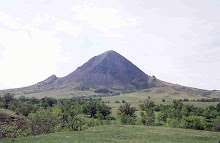
State officials have said at least 17 tribes place special significance on Bear Butte. Others have said nearly 60 tribes consider the peak sacred. Bear Butte, a volcano that never erupted, has been a state park since 1961, and a special area is set aside for Indian ceremonies.
document.write('');Opponents of Allen's project said at the hearing that thousands of noisy motorcycles and other large campground and entertainment complexes near Sturgis already disrupt the serenity of Bear Butte.
"We need a quiet place," said Arvol Looking Horse, a Sioux who wore a fully feathered headdress and buckskin tunic. "Bear Butte is a very sacred place."
Indian groups, led by the Bear Butte International Alliance, oppose all development that would disturb the tranquility around the peak. The alliance has been pressing county officials to stop issuing beer and liquor licenses within a seven-mile radius of Bear Butte.
Dean Wink, a county commissioner, said he understands the significance Indians attach to the butte. But he said that other businesses in the area have received alcohol licenses and that to deny Allen the same opportunity would be to deny him his rights.
Work on Allen's project is under way.
Allen said he hopes to have the campground and biker bar ready for this year's motorcycle rally, which officially runs one week but also draws people for a week before and a week afterward.
Copyright © 2006 The Seattle Times Company
http://seattletimes.nwsource.com/html/nationworld/2002913894_butte06.html
Beer license approved near sacred Indian butte
By Joe Kafka
The Associated Press
DOUG DREYER / AP
Jay Allen, right, who wants to build a biker bar at the base of Bear Butte, sits near Chief Arvol Looking Horse, a spiritual leader from the Cheyenne River Reservation in South Dakota, on Tuesday during a Mead County Commission meeting.
STURGIS, S.D. — To American Indians, Bear Butte is a place to pray and meditate, where colorful prayer cloth and pouches with offerings of tobacco and sage are tied to tree branches along a hiking trail.
For business owners, the 4,422-foot peak is a destination for thousands of bikers who fork out money for beer and a place to camp during an annual rally in nearby Sturgis.
Despite strong opposition from Indian groups hoping to prevent further encroachment on the mountain, Meade County authorities Tuesday unanimously approved a beer license for a campground, biker bar and concert area.
The butte, on the fringe of the Black Hills, is in a state park and is protected as a National Historic Landmark. However, it is surrounded by private property.
One of those landowners is Jay Allen, who owns the Broken Spoke Saloon in Sturgis, just a few miles from the mountain.
Allen plans to open a bar about 2 ½ miles from the base of Bear Butte, drawing customers during the monster motorcycle rally that draws several hundred thousand people each August. He plans to also take advantage of the rally to fill his campground and sell beer.
Allen first announced development of the project on a square mile of prairie last summer, proposing to call it Sacred Ground. He talked about building an 80-foot Indian statue as a tribute to tribes but abandoned the idea and changed the project's name to Sturgis County Line after criticism from Indian groups.
He argued at the hearing that he has a right to develop his land, which totals about 600 acres. But amid strong opposition from a room full of Indians from several tribes, Allen pledged to be a good neighbor.
"I'm embarrassed that it's evolved to this," he said.
State officials have said at least 17 tribes place special significance on Bear Butte. Others have said nearly 60 tribes consider the peak sacred. Bear Butte, a volcano that never erupted, has been a state park since 1961, and a special area is set aside for Indian ceremonies.
document.write('');Opponents of Allen's project said at the hearing that thousands of noisy motorcycles and other large campground and entertainment complexes near Sturgis already disrupt the serenity of Bear Butte.
"We need a quiet place," said Arvol Looking Horse, a Sioux who wore a fully feathered headdress and buckskin tunic. "Bear Butte is a very sacred place."
Indian groups, led by the Bear Butte International Alliance, oppose all development that would disturb the tranquility around the peak. The alliance has been pressing county officials to stop issuing beer and liquor licenses within a seven-mile radius of Bear Butte.
Dean Wink, a county commissioner, said he understands the significance Indians attach to the butte. But he said that other businesses in the area have received alcohol licenses and that to deny Allen the same opportunity would be to deny him his rights.
Work on Allen's project is under way.
Allen said he hopes to have the campground and biker bar ready for this year's motorcycle rally, which officially runs one week but also draws people for a week before and a week afterward.
Copyright © 2006 The Seattle Times Company
http://seattletimes.nwsource.com/html/nationworld/2002913894_butte06.html
Wednesday, April 5, 2006
Beer sales get unanimous OK
Beer sales get unanimous OK
By Dan Daly, Journal Staff Writer Wednesday, April 05, 2006
STURGIS � After listening to nearly two hours of comment � some for, most against, and much of it impassioned � the Meade County Commission voted 5-0 to approve a beer license for a new Sturgis motorcycle-rally bar and campground near Bear Butte, a sacred site to many American Indians.
Entrepreneur Jay Allen, owner of the Broken Spoke Saloon, bought 600 acres of land north of the butte. He plans to open a new Broken Spoke Saloon and Sturgis County Line Campground on the site for the 2006 Sturgis motorcycle rally. Later, he hopes to open a concert venue as well.
But opposition to Allen’s plan has been intense. Diverse American Indian groups including the Sturgis-based Bear Butte International Alliance and the Northern Cheyenne Tribe of Montana oppose the project. The Meade County Commission received 633 letters on the subject. There was even an op-ed piece in the Los Angeles Times decrying Allen’s proposal.
Tuesday’s commission meeting culminated a day of prayer and protest by Indian groups that began at Bear Butte and ended on the streets of Sturgis.
More than 400 marchers, singing and chanting “Save Bear Butte,” walked in a slow procession behind a Lakota drum group and spiritual leader Arvol Looking Horse. The march ended at the front entrance of Meade County Courthouse.
Protesters carried signs that read “The End is Near, Jay Allen is Here” and “Develop Your Mind, Not Sacred Sites.”
Inside, the courtroom-turned commission room had space for only 70 people. Most of the crowd waited outside through the entire meeting.
About 25 journalists crowded into the jury box-turned press gallery as Jay Allen made his case for approval of the beer license � and 20 opponents tried to persuade the commission to deny the license.
Allen’s attorney, Bryce Flint, told the commission that the bar itself would be 2-1/2 miles north of the base of Bear Butte. He noted that other licensed biker bars and music venues, including one across the road from the Sturgis County Line property, are as close or nearly as close to Bear Butte.
Among those who spoke on Allen’s behalf was Sasha Mullins, who works for the Broken Spoke. She described her boss as a big-hearted person who wants to develop a harmonious environment for his employees and his patrons.
Flint noted that Allen’s beer-license request meets both legal tests set down by state law � character of the applicant and location of the establishment. He said Allen, who operates Broken Spoke Saloons at motorcycle events in four states, has been found to be a responsible businessman. Flint also said the neighboring landowners support his right as a landowner.
The Meade County Commission apparently agreed. There was little discussion among the five commissioners before the 5-0 vote. Dean Wink was the only commissioner who spoke to the crowd.
“I’m not convinced that Meade County needs another biker bar,” Wink said. “I do feel strongly � that private property rights have been eroded.” He said Allen’s proposal meets the standards set by the state and the county and therefore deserves a beer license. “I have a problem deviating from the standards we’ve set down.”
The decision came despite a series of passionate speeches from Indian people who talked of the sacredness of Bear Butte and its role in their cultural history. They spoke about the need to preserve the sanctity of Bear Butte so that future generations of Indian pilgrims will have a place to fast, pray and cleanse their spirits.
Speakers compared Bear Butte to Jerusalem, to Mecca, to the Christian Bible and to Mount Sinai.
“Bear Butte is a sacred place, and we need to keep it as our grandfathers (kept it),” said Looking Horse, who is revered in Lakota religion as the keeper of the sacred calf pipe. “When we sit on top of Bear Butte, we communicate with our creator.”
Carter Camp of the Intertribal Coalition to Defend Bear Butte also spoke. His group is pushing for a five-mile buffer around Bear Butte. He told the commissioners that generations of American Indian soldiers who fought for the United States have come home to Bear Butte to heal their spirits. He said every biker that goes to the new Broken Spoke Saloon will go rumbling past Bear Butte. “The location of this could not be worse,” he said.
The Northern Cheyenne Tribe, which traces its very survival to Bear Butte, has been buying land around Bear Butte for years, L. Jace Killsback, a member of the Northern Cheyenne Tribal Council, said. He said the tribe has about 700 acres set aside, and it is trying to buy more.
Others said they have no objection to Jay Allen opening a biker bar for the Sturgis rally � but not at this location.
The Sturgis County Line proposal also apparently renewed some of the debate in Meade County about the Sturgis motorcycle rally. Jesse Levin, a non-Indian rancher who lives 30 miles east of Sturgis, told the commissioners that she is disgusted by the trash, dust and drunken bikers that she has seen at her place.
“When is enough going to be enough for us in Meade County?” she asked the commissioners.
State Sen. Stan Adelstein, R-Rapid City, who chairs the House-Senate Tribal Relations Committee, also spoke against the measure, as did Bruce Ellison, a Rapid City attorney.
Ellison said the United States was founded on the principle of religious freedom. “We have to figure out a way in which we can co-exist,” he said.
Contact Dan Daly at 394-8421 or dan.daly@rapidcityjournal.com
http://www.rapidcityjournal.com/articles/2006/04/05/news/top/news01.txt
By Dan Daly, Journal Staff Writer Wednesday, April 05, 2006
STURGIS � After listening to nearly two hours of comment � some for, most against, and much of it impassioned � the Meade County Commission voted 5-0 to approve a beer license for a new Sturgis motorcycle-rally bar and campground near Bear Butte, a sacred site to many American Indians.
Entrepreneur Jay Allen, owner of the Broken Spoke Saloon, bought 600 acres of land north of the butte. He plans to open a new Broken Spoke Saloon and Sturgis County Line Campground on the site for the 2006 Sturgis motorcycle rally. Later, he hopes to open a concert venue as well.
But opposition to Allen’s plan has been intense. Diverse American Indian groups including the Sturgis-based Bear Butte International Alliance and the Northern Cheyenne Tribe of Montana oppose the project. The Meade County Commission received 633 letters on the subject. There was even an op-ed piece in the Los Angeles Times decrying Allen’s proposal.
Tuesday’s commission meeting culminated a day of prayer and protest by Indian groups that began at Bear Butte and ended on the streets of Sturgis.
More than 400 marchers, singing and chanting “Save Bear Butte,” walked in a slow procession behind a Lakota drum group and spiritual leader Arvol Looking Horse. The march ended at the front entrance of Meade County Courthouse.
Protesters carried signs that read “The End is Near, Jay Allen is Here” and “Develop Your Mind, Not Sacred Sites.”
Inside, the courtroom-turned commission room had space for only 70 people. Most of the crowd waited outside through the entire meeting.
About 25 journalists crowded into the jury box-turned press gallery as Jay Allen made his case for approval of the beer license � and 20 opponents tried to persuade the commission to deny the license.
Allen’s attorney, Bryce Flint, told the commission that the bar itself would be 2-1/2 miles north of the base of Bear Butte. He noted that other licensed biker bars and music venues, including one across the road from the Sturgis County Line property, are as close or nearly as close to Bear Butte.
Among those who spoke on Allen’s behalf was Sasha Mullins, who works for the Broken Spoke. She described her boss as a big-hearted person who wants to develop a harmonious environment for his employees and his patrons.
Flint noted that Allen’s beer-license request meets both legal tests set down by state law � character of the applicant and location of the establishment. He said Allen, who operates Broken Spoke Saloons at motorcycle events in four states, has been found to be a responsible businessman. Flint also said the neighboring landowners support his right as a landowner.
The Meade County Commission apparently agreed. There was little discussion among the five commissioners before the 5-0 vote. Dean Wink was the only commissioner who spoke to the crowd.
“I’m not convinced that Meade County needs another biker bar,” Wink said. “I do feel strongly � that private property rights have been eroded.” He said Allen’s proposal meets the standards set by the state and the county and therefore deserves a beer license. “I have a problem deviating from the standards we’ve set down.”
The decision came despite a series of passionate speeches from Indian people who talked of the sacredness of Bear Butte and its role in their cultural history. They spoke about the need to preserve the sanctity of Bear Butte so that future generations of Indian pilgrims will have a place to fast, pray and cleanse their spirits.
Speakers compared Bear Butte to Jerusalem, to Mecca, to the Christian Bible and to Mount Sinai.
“Bear Butte is a sacred place, and we need to keep it as our grandfathers (kept it),” said Looking Horse, who is revered in Lakota religion as the keeper of the sacred calf pipe. “When we sit on top of Bear Butte, we communicate with our creator.”
Carter Camp of the Intertribal Coalition to Defend Bear Butte also spoke. His group is pushing for a five-mile buffer around Bear Butte. He told the commissioners that generations of American Indian soldiers who fought for the United States have come home to Bear Butte to heal their spirits. He said every biker that goes to the new Broken Spoke Saloon will go rumbling past Bear Butte. “The location of this could not be worse,” he said.
The Northern Cheyenne Tribe, which traces its very survival to Bear Butte, has been buying land around Bear Butte for years, L. Jace Killsback, a member of the Northern Cheyenne Tribal Council, said. He said the tribe has about 700 acres set aside, and it is trying to buy more.
Others said they have no objection to Jay Allen opening a biker bar for the Sturgis rally � but not at this location.
The Sturgis County Line proposal also apparently renewed some of the debate in Meade County about the Sturgis motorcycle rally. Jesse Levin, a non-Indian rancher who lives 30 miles east of Sturgis, told the commissioners that she is disgusted by the trash, dust and drunken bikers that she has seen at her place.
“When is enough going to be enough for us in Meade County?” she asked the commissioners.
State Sen. Stan Adelstein, R-Rapid City, who chairs the House-Senate Tribal Relations Committee, also spoke against the measure, as did Bruce Ellison, a Rapid City attorney.
Ellison said the United States was founded on the principle of religious freedom. “We have to figure out a way in which we can co-exist,” he said.
Contact Dan Daly at 394-8421 or dan.daly@rapidcityjournal.com
http://www.rapidcityjournal.com/articles/2006/04/05/news/top/news01.txt
Friday, January 27, 2006
Lawmakers want buffer to protect Bear Butte
Lawmakers want buffer to protect Bear Butte
By Celeste Calvitto, Journal Staff Writer Friday, January 27, 2006
PIERRE - Paul Valandra and Jim Bradford are on a mission.
The two Democratic state lawmakers, by introducing legislation to prohibit liquor licenses within four miles of Bear Butte near Sturgis, are seeking to protect a site that is sacred to many American Indians on the northern Great Plains.
“But we don’t want to scare anybody, either,” Valandra said this week.
Valandra, a Rosebud Sioux, and Bradford, a member of the Oglala Sioux Tribe, said they are working on an outreach effort to let people who think they might be affected know that the legislators want to talk to everybody.
“We know that we are causing concern for many people out there,” Valandra said. “We want to hear their views. � They’ve got our cell-phone numbers.”
Specifically, HB1233 says that on-sale licenses would not be issued to current businesses or those that will be within four miles of the boundaries of Bear Butte State Park.
The action comes as a result of an announcement last summer by Jay Allen, the Arizona-based owner of the Broken Spoke Saloon in Sturgis. He wants to build a biker bar and concert site on land south of Bear Butte for this year’s Sturgis motorcycle rally.
“I remember thinking, that guy is going to catch some hell before this is all over,” Valandra said with a chuckle. “There will be Indians coming from all over.”
Allen did not return phone calls seeking comment before news deadline. But in an interview with the Rapid City Journal last year after opposition surfaced to his plans, he said, “From the onset, I’ve reached my arms out to the Native American community with totally good intentions to recognize their heritage, only to discover that it was not well received.”
State Sen. Kenneth McNenny, R-Sturgis, said the proposal may have “disastrous consquences.” He said the proposed boundaries are unclear but that he is concerned that the plan could affect a number of venues such as campgrounds and may include part of the city of Sturgis.
“I am very apprehensive about it,” House Majority Leader Larry Rhoden, R-Union Center, said.
Meanwhile, Bradford said he and Valandra have a plan to “grandfather” existing establishments with liquor licenses that might be affected.
They also have an explanation for the four-mile distance.
When tribes challenged a plan for a shooting range near Bear Butte as disruptive, experts said it would take four miles to create a buffer from noise.
“We decided to go with that,” Valandra said.
They said the quest to protect Bear Butte is shared by others.
“It’s not only Indians who are concerned,” Bradford said.
The Defenders of the Black Hills group, which came out against Allen’s plan, is raising money to buy land around Bear Butte to create a buffer zone.
“Bear Butte belongs to everbody,” Valandra said.
And the two lawmakers believe that bikers who make the pilgrimage to Sturgis each year won’t be upset with their plan.
“Bikers are cool guys,” Valandra said. “They don’t want to desecrate Indian ground.”
Bradford said more and more Sturgis rally bikers from throughout the country are visiting the Pine Ridge reservation.
“They are interested in our culture,” he said.
Bradford acknowledged that even if the law is passed, it won’t go into effect until July 1, and it wouldn’t stop Allen’s plan if he buys a Meade County license before then.
But he calls it a “step in the right direction” to preserve the integrity of Bear Butte.
“To me, it’s a unified church,” Bradford said. “I feel like other people would whose religion is being disturbed.”
Contact Celeste Calvitto at 394-8438 or Celeste.Calvitto@rapidcityjournal.com
http://www.rapidcityjournal.com/articles/2006/01/27/news/top/news02.txt
By Celeste Calvitto, Journal Staff Writer Friday, January 27, 2006
PIERRE - Paul Valandra and Jim Bradford are on a mission.
The two Democratic state lawmakers, by introducing legislation to prohibit liquor licenses within four miles of Bear Butte near Sturgis, are seeking to protect a site that is sacred to many American Indians on the northern Great Plains.
“But we don’t want to scare anybody, either,” Valandra said this week.
Valandra, a Rosebud Sioux, and Bradford, a member of the Oglala Sioux Tribe, said they are working on an outreach effort to let people who think they might be affected know that the legislators want to talk to everybody.
“We know that we are causing concern for many people out there,” Valandra said. “We want to hear their views. � They’ve got our cell-phone numbers.”
Specifically, HB1233 says that on-sale licenses would not be issued to current businesses or those that will be within four miles of the boundaries of Bear Butte State Park.
The action comes as a result of an announcement last summer by Jay Allen, the Arizona-based owner of the Broken Spoke Saloon in Sturgis. He wants to build a biker bar and concert site on land south of Bear Butte for this year’s Sturgis motorcycle rally.
“I remember thinking, that guy is going to catch some hell before this is all over,” Valandra said with a chuckle. “There will be Indians coming from all over.”
Allen did not return phone calls seeking comment before news deadline. But in an interview with the Rapid City Journal last year after opposition surfaced to his plans, he said, “From the onset, I’ve reached my arms out to the Native American community with totally good intentions to recognize their heritage, only to discover that it was not well received.”
State Sen. Kenneth McNenny, R-Sturgis, said the proposal may have “disastrous consquences.” He said the proposed boundaries are unclear but that he is concerned that the plan could affect a number of venues such as campgrounds and may include part of the city of Sturgis.
“I am very apprehensive about it,” House Majority Leader Larry Rhoden, R-Union Center, said.
Meanwhile, Bradford said he and Valandra have a plan to “grandfather” existing establishments with liquor licenses that might be affected.
They also have an explanation for the four-mile distance.
When tribes challenged a plan for a shooting range near Bear Butte as disruptive, experts said it would take four miles to create a buffer from noise.
“We decided to go with that,” Valandra said.
They said the quest to protect Bear Butte is shared by others.
“It’s not only Indians who are concerned,” Bradford said.
The Defenders of the Black Hills group, which came out against Allen’s plan, is raising money to buy land around Bear Butte to create a buffer zone.
“Bear Butte belongs to everbody,” Valandra said.
And the two lawmakers believe that bikers who make the pilgrimage to Sturgis each year won’t be upset with their plan.
“Bikers are cool guys,” Valandra said. “They don’t want to desecrate Indian ground.”
Bradford said more and more Sturgis rally bikers from throughout the country are visiting the Pine Ridge reservation.
“They are interested in our culture,” he said.
Bradford acknowledged that even if the law is passed, it won’t go into effect until July 1, and it wouldn’t stop Allen’s plan if he buys a Meade County license before then.
But he calls it a “step in the right direction” to preserve the integrity of Bear Butte.
“To me, it’s a unified church,” Bradford said. “I feel like other people would whose religion is being disturbed.”
Contact Celeste Calvitto at 394-8438 or Celeste.Calvitto@rapidcityjournal.com
http://www.rapidcityjournal.com/articles/2006/01/27/news/top/news02.txt
Friday, October 28, 2005
Bear Butte biker bar to get new name and new location
Bear Butte biker bar to get new name and new location
By Dan Daly, Journal Staff Writer Friday, October 28, 2005
STURGIS -- Sacred Ground, it turns out, was more sacred than Jay Allen realized.
Allen, the Arizona-based owner of the Broken Spoke Saloon in Sturgis, announced plans during the 2005 Sturgis motorcycle rally to build a rally-week biker bar and concert venue on land north of Bear Butte.
He was going to name it Sacred Ground as a tribute, he said, to nearby Bear Butte, a sacred site to the Lakota and other American Indian cultures.
Allen even talked about erecting tipis and building an 80-foot statue of an American Indian on the 600-acre site.
It would be open for business in time for the 2006 rally.
The announcement drew strong objections, however, from a number of Indians.
“Bear Butte and the surrounding area is indeed sacred ground, and this encroachment of sacred land must be stopped,” a group named the Bear Butte International Alliance wrote in a recent issue of the Lakota Journal.
“This business venture impacts more than one businessman’s vision. This will affect the quality of life for area residents and for everyone who holds Bear Butte dear to their hearts,” the column said.
On Thursday, Allen announced a number of changes to his plan.
He’s changing the name of the venue to Sturgis County Line.
He is going to build the concert venue at the far north end of the property. It will be farther from Bear Butte than the Dragpipe Saloon, which is already in business, Allen said.
He’s also going to make the land available for community events and American Indian celebrations during the rest of the year.
And the 80-foot Indian sculpture won’t be built.
“From the onset, I’ve reached my arms out to the Native American community with totally good intentions to recognize their heritage, only to discover that it was not well-received,” Allen said in Thursday’s news release. “I thought they would be so happy that someone in the rally business would care so much about their culture and the importance of what this land means.”
Allen said he believed that he could educate motorcycle tourists about American Indian culture.
“Granted, the rally is a great party. But experiencing the Black Hills is much more than that; it’s a spiritual encounter,” he said. “We intend to give the motorcycle tourist a more enchanting experience than ever before during rally because the land is so beautiful and inspiring.”
Allen also said that he had offered at one point to sell the 600 acres for what he paid to a tribe or Indian group that wanted to preserve the land. He said the same offer was made by Jim Reed, the rancher who sold the acres to him.
It is unclear how the changes will be received. The Bear Butte International Alliance temporarily withheld official comment Thursday.
But Mato Standing High, a lawyer and teacher at Black Hills State University, has been a critic of the plan. “Kind of makes it hard to go on a spiritual journey to the Black Hills with the background noise of ZZ Top and Harleys,” he said.
Contacted Thursday about Allen’s revised plan, Standing High said he remains unconvinced.
“I understand that they are trying to keep their distance, and they’re trying to do it respectfully,” Standing High said. “But it’s hard for somebody to engage in their religious practices when such activities are literally within view, within earshot.”
Contact Dan Daly at 394-8421 or dan.daly@rapidcityjournal.com
http://www.rapidcityjournal.com/articles/2005/10/28/news/local/news01.txt
By Dan Daly, Journal Staff Writer Friday, October 28, 2005
STURGIS -- Sacred Ground, it turns out, was more sacred than Jay Allen realized.
Allen, the Arizona-based owner of the Broken Spoke Saloon in Sturgis, announced plans during the 2005 Sturgis motorcycle rally to build a rally-week biker bar and concert venue on land north of Bear Butte.
He was going to name it Sacred Ground as a tribute, he said, to nearby Bear Butte, a sacred site to the Lakota and other American Indian cultures.
Allen even talked about erecting tipis and building an 80-foot statue of an American Indian on the 600-acre site.
It would be open for business in time for the 2006 rally.
The announcement drew strong objections, however, from a number of Indians.
“Bear Butte and the surrounding area is indeed sacred ground, and this encroachment of sacred land must be stopped,” a group named the Bear Butte International Alliance wrote in a recent issue of the Lakota Journal.
“This business venture impacts more than one businessman’s vision. This will affect the quality of life for area residents and for everyone who holds Bear Butte dear to their hearts,” the column said.
On Thursday, Allen announced a number of changes to his plan.
He’s changing the name of the venue to Sturgis County Line.
He is going to build the concert venue at the far north end of the property. It will be farther from Bear Butte than the Dragpipe Saloon, which is already in business, Allen said.
He’s also going to make the land available for community events and American Indian celebrations during the rest of the year.
And the 80-foot Indian sculpture won’t be built.
“From the onset, I’ve reached my arms out to the Native American community with totally good intentions to recognize their heritage, only to discover that it was not well-received,” Allen said in Thursday’s news release. “I thought they would be so happy that someone in the rally business would care so much about their culture and the importance of what this land means.”
Allen said he believed that he could educate motorcycle tourists about American Indian culture.
“Granted, the rally is a great party. But experiencing the Black Hills is much more than that; it’s a spiritual encounter,” he said. “We intend to give the motorcycle tourist a more enchanting experience than ever before during rally because the land is so beautiful and inspiring.”
Allen also said that he had offered at one point to sell the 600 acres for what he paid to a tribe or Indian group that wanted to preserve the land. He said the same offer was made by Jim Reed, the rancher who sold the acres to him.
It is unclear how the changes will be received. The Bear Butte International Alliance temporarily withheld official comment Thursday.
But Mato Standing High, a lawyer and teacher at Black Hills State University, has been a critic of the plan. “Kind of makes it hard to go on a spiritual journey to the Black Hills with the background noise of ZZ Top and Harleys,” he said.
Contacted Thursday about Allen’s revised plan, Standing High said he remains unconvinced.
“I understand that they are trying to keep their distance, and they’re trying to do it respectfully,” Standing High said. “But it’s hard for somebody to engage in their religious practices when such activities are literally within view, within earshot.”
Contact Dan Daly at 394-8421 or dan.daly@rapidcityjournal.com
http://www.rapidcityjournal.com/articles/2005/10/28/news/local/news01.txt
Friday, September 19, 2003
State returns shooting range grant to feds
State returns shooting range grant to feds
Friday, September 19, 2003
HUD cites pattern of suspicious data used to support nine grants awarded under Janklow.
By Denise Ross, Journal Staff Writer
The state of South Dakota will cancel $511,200 in federal grant money it awarded in December to a shooting range planned for northeast of Sturgis and will repay the federal government $313,800 already spent on the project, according to a Thursday letter.
South Dakota's Tourism and State Development secretary John Calvin sent the letter to a HUD official in Denver in response to a HUD investigation that found demographic data used by the state to support the shooting range grant and nine others differed significantly from U.S. census data.
In their report to the state, HUD officials note they have the authority to withhold future grant money if they aren't satisfied with the state's response to the 74-page report issued Aug. 18.
The state's plan to cancel and repay the shooting range grant, totaling $825,000, will require HUD approval before it is final. HUD officials in Denver did not return a telephone call from the Rapid City Journal on Thursday.
Former Gov. Bill Janklow, now South Dakota's congressman, awarded each of the grants now in question under HUD's Community Development Block Grant program. Under the CDBG program, units of local government receive chunks of federal money and have discretion in awarding grants to projects that meet criteria set forth by the federal government. In South Dakota, all CDBG money goes through the state except the grants awarded in Rapid City and Sioux Falls, where the cities distribute grants.
What the state's decision to cancel the shooting range grant means for the future of the project was unclear Thursday. Organizers had planned to use only $75,000 in local funding for the $900,000 project. The nonprofit Black Hills Sportsmen's Complex had planned to operate the shooting range, already the subject of two lawsuits, at a site four miles north of Bear Butte State Park.
Sturgis Mayor Mark Ziegler said he could not comment on the shooting range because of ongoing litigation.
One of the lawsuits, filed against HUD in April by a group of Sturgis residents, made the allegation that the shooting range would not benefit low- and moderate-income people as required by CDBG criteria. Federal rules require that grants go to projects that would benefit a geographic area where at least 51 percent of the population is low- or moderate-income.
A second lawsuit, filed in February, contends that the state failed to consult with American Indian tribes about the shooting range's impact on Bear Butte, a site sacred to a number of tribes. The judge in that case on Thursday postponed indefinitely a Nov. 4 trial date, noting that the state's move to cancel the grant could end the project.
HUD investigated the shooting range grant and a series of grants awarded from the $8.5 million worth of South Dakota's 2002 CDBG cycle. HUD found a pattern in which the state consistently used low- and moderate- income data that exceeded existing census data by double-digit percentages.
In the case of the shooting range grant, U.S. census data showed that 42.5 percent of Sturgis residents meet that definition. In contrast, a telephone survey used to support the grant showed that 56.1 percent of the people in Sturgis meet that definition.
"There is a consistent pattern of survey results showing a significantly higher percentage of low- and moderate- income persons than Census data," the HUD report says. "The difference between the survey data and both 1990 and 2000 Census data often exceeds 10 percent. In one egregious case, the difference is more than 20 percent."
HUD found that when census data already showed an area met CDBG guidelines, the census data was used to support the grant, and no survey was done.
Communities where a survey showed a different percentage of low- and moderate-income people from the 2000 Census are listed below.
-- Aberdeen � Census, 41.1 percent; survey, 52 percent.
-- Avon � Census, 40.6 percent; survey, 56.36 percent.
-- Corsica � Census, 41.2 percent; survey, 56.36 percent.
-- Iroquois � Census, 49.1 percent; survey, 56.17 percent.
-- DeSmet � Census, 42 percent; survey, 51.05 percent.
-- Beresford � Census, 45.2 percent; survey, 54.9 percent.
-- Mobridge � Census, 51.2 percent; survey, 52 percent.
-- Minnehaha County � Census, 30.9 percent; survey, 64 percent.
-- Black Hawk Sanitary District � Census, no data; survey, 52.9 percent.
Also, HUD found that the state repeatedly did not clearly identify the geographic area that would benefit from a given grant. HUD also found that sometimes one geographic area was identified as the area that would benefit, but data from a different geographic area was cited when listing the criteria.
State of South Dakota officials have 45 days from the Aug. 18 report to respond to HUD's findings. If HUD and the state are unable to agree on what should be done, HUD rules allow the agency to take one of six different actions. Those include issuing a letter of reprimand, canceling future block grants to the state and instituting a policy of releasing grant funds only after HUD officials approve the projects in question.
Contact Denise Ross at 394-8438 or denise.ross@rapidcityjournal.com
http://www.rapidcityjournal.com/articles/2003/09/19/news/local/top/news01.txt
Friday, September 19, 2003
HUD cites pattern of suspicious data used to support nine grants awarded under Janklow.
By Denise Ross, Journal Staff Writer
The state of South Dakota will cancel $511,200 in federal grant money it awarded in December to a shooting range planned for northeast of Sturgis and will repay the federal government $313,800 already spent on the project, according to a Thursday letter.
South Dakota's Tourism and State Development secretary John Calvin sent the letter to a HUD official in Denver in response to a HUD investigation that found demographic data used by the state to support the shooting range grant and nine others differed significantly from U.S. census data.
In their report to the state, HUD officials note they have the authority to withhold future grant money if they aren't satisfied with the state's response to the 74-page report issued Aug. 18.
The state's plan to cancel and repay the shooting range grant, totaling $825,000, will require HUD approval before it is final. HUD officials in Denver did not return a telephone call from the Rapid City Journal on Thursday.
Former Gov. Bill Janklow, now South Dakota's congressman, awarded each of the grants now in question under HUD's Community Development Block Grant program. Under the CDBG program, units of local government receive chunks of federal money and have discretion in awarding grants to projects that meet criteria set forth by the federal government. In South Dakota, all CDBG money goes through the state except the grants awarded in Rapid City and Sioux Falls, where the cities distribute grants.
What the state's decision to cancel the shooting range grant means for the future of the project was unclear Thursday. Organizers had planned to use only $75,000 in local funding for the $900,000 project. The nonprofit Black Hills Sportsmen's Complex had planned to operate the shooting range, already the subject of two lawsuits, at a site four miles north of Bear Butte State Park.
Sturgis Mayor Mark Ziegler said he could not comment on the shooting range because of ongoing litigation.
One of the lawsuits, filed against HUD in April by a group of Sturgis residents, made the allegation that the shooting range would not benefit low- and moderate-income people as required by CDBG criteria. Federal rules require that grants go to projects that would benefit a geographic area where at least 51 percent of the population is low- or moderate-income.
A second lawsuit, filed in February, contends that the state failed to consult with American Indian tribes about the shooting range's impact on Bear Butte, a site sacred to a number of tribes. The judge in that case on Thursday postponed indefinitely a Nov. 4 trial date, noting that the state's move to cancel the grant could end the project.
HUD investigated the shooting range grant and a series of grants awarded from the $8.5 million worth of South Dakota's 2002 CDBG cycle. HUD found a pattern in which the state consistently used low- and moderate- income data that exceeded existing census data by double-digit percentages.
In the case of the shooting range grant, U.S. census data showed that 42.5 percent of Sturgis residents meet that definition. In contrast, a telephone survey used to support the grant showed that 56.1 percent of the people in Sturgis meet that definition.
"There is a consistent pattern of survey results showing a significantly higher percentage of low- and moderate- income persons than Census data," the HUD report says. "The difference between the survey data and both 1990 and 2000 Census data often exceeds 10 percent. In one egregious case, the difference is more than 20 percent."
HUD found that when census data already showed an area met CDBG guidelines, the census data was used to support the grant, and no survey was done.
Communities where a survey showed a different percentage of low- and moderate-income people from the 2000 Census are listed below.
-- Aberdeen � Census, 41.1 percent; survey, 52 percent.
-- Avon � Census, 40.6 percent; survey, 56.36 percent.
-- Corsica � Census, 41.2 percent; survey, 56.36 percent.
-- Iroquois � Census, 49.1 percent; survey, 56.17 percent.
-- DeSmet � Census, 42 percent; survey, 51.05 percent.
-- Beresford � Census, 45.2 percent; survey, 54.9 percent.
-- Mobridge � Census, 51.2 percent; survey, 52 percent.
-- Minnehaha County � Census, 30.9 percent; survey, 64 percent.
-- Black Hawk Sanitary District � Census, no data; survey, 52.9 percent.
Also, HUD found that the state repeatedly did not clearly identify the geographic area that would benefit from a given grant. HUD also found that sometimes one geographic area was identified as the area that would benefit, but data from a different geographic area was cited when listing the criteria.
State of South Dakota officials have 45 days from the Aug. 18 report to respond to HUD's findings. If HUD and the state are unable to agree on what should be done, HUD rules allow the agency to take one of six different actions. Those include issuing a letter of reprimand, canceling future block grants to the state and instituting a policy of releasing grant funds only after HUD officials approve the projects in question.
Contact Denise Ross at 394-8438 or denise.ross@rapidcityjournal.com
http://www.rapidcityjournal.com/articles/2003/09/19/news/local/top/news01.txt
Wednesday, March 19, 2003
Future of shooting range goes before federal judge
Future of shooting range goes before federal judge
By Bill Cissell, Journal Staff Writer Wednesday, March 19, 2003
RAPID CITY � The future of a shooting range north of Sturgis is in the hands of a federal judge.
A hearing on a preliminary injunction to temporarily stop any further work on the project is set for 9 a.m. Monday, March 24, before U.S. District Judge Karen Schreier.
The judge also set 9 a.m. June 30 as the hearing date for a permanent injunction on the shooting range.
Construction has not begun; plans for the range are still in the design stage.
Five American Indian tribes � Northern Cheyenne, Rosebud Sioux, Yankton Sioux, Crow Creek Sioux and Standing Rock Sioux � filed a motion requesting the injunction.
They said noise from the Black Hills Sportsman's Complex, which is planned for more than four miles north of Bear Butte, will interfere with religious ceremonies at the butte, which is considered sacred by many Plains Indians. A grassroots organization called Defenders of the Black Hills also joined in the action.
The injunction request names as defendants Mel Martinez, U.S. secretary of Housing and Urban Development, the Black Hills Council of Local Governments, Sturgis Industrial Expansion Corp., city of Sturgis and Black Hills Sportsman's Complex.
The tribes also say they weren't contacted about the proposal, which they say is mandated by federal law.
The shooting complex would have pistol, rifle and archery ranges, as well as a place for law enforcement officials to practice and youth organizations to learn shooting safety.
Organizers said the range also gives local gun and ammunition manufacturers a place to test and demonstrate new products.
On March 17, in a telephone conference call that included attorneys for all those involved and Schreier, range developers agreed "to not proceed with plans but continue the planning process."
They said they hoped to have the facility in operation this summer.
Money for the almost $1 million project came primarily from an $850,000 federal community development block grant.
Local organizers were required to raise $75,000.
In an Oct. 17, 2002, letter to Black Hills Council of Local Governments executive director Van Lindquist, the National Park Service suggested that "the Black Hills Council of Local Governments conduct a gunfire test and invite the interested parties ... to experience the sound levels from Bear Butte."
Black Hills Council provides administrative and technical support to a variety of local governments. It was in charge of shepherding the grant through the approval process.
In a subsequent letter to Don Kilman of the Office of Federal Agency Programs, Advisory Council on Historic Preservation, Lindquist said a live test couldn't be done because the range, with all of its planned noise baffles and berms, would have to be built in order to have a good demonstration.
In the same letter, Lindquist said that during a Sept. 11, 2002, meeting of representatives of the state's historic preservation office, block grant officials and the Black Hills Council, it was agreed that getting approval from the Tribal Government Relation Office would fulfill the requirement to contact Indian tribes.
The site, 13 miles north of Sturgis and east off of Highway 79, is the second location planned.
The first, about 11 miles east of Sturgis on Alkali Road, was rejected after it came under fire from adjacent landowners.
Contact Bill Cissell at 394-8412 or e-mail bill.cissell@rapidcityjournal.com
http://www.rapidcityjournal.com/articles/2003/03/19/news/local/news07.txt
By Bill Cissell, Journal Staff Writer Wednesday, March 19, 2003
RAPID CITY � The future of a shooting range north of Sturgis is in the hands of a federal judge.
A hearing on a preliminary injunction to temporarily stop any further work on the project is set for 9 a.m. Monday, March 24, before U.S. District Judge Karen Schreier.
The judge also set 9 a.m. June 30 as the hearing date for a permanent injunction on the shooting range.
Construction has not begun; plans for the range are still in the design stage.
Five American Indian tribes � Northern Cheyenne, Rosebud Sioux, Yankton Sioux, Crow Creek Sioux and Standing Rock Sioux � filed a motion requesting the injunction.
They said noise from the Black Hills Sportsman's Complex, which is planned for more than four miles north of Bear Butte, will interfere with religious ceremonies at the butte, which is considered sacred by many Plains Indians. A grassroots organization called Defenders of the Black Hills also joined in the action.
The injunction request names as defendants Mel Martinez, U.S. secretary of Housing and Urban Development, the Black Hills Council of Local Governments, Sturgis Industrial Expansion Corp., city of Sturgis and Black Hills Sportsman's Complex.
The tribes also say they weren't contacted about the proposal, which they say is mandated by federal law.
The shooting complex would have pistol, rifle and archery ranges, as well as a place for law enforcement officials to practice and youth organizations to learn shooting safety.
Organizers said the range also gives local gun and ammunition manufacturers a place to test and demonstrate new products.
On March 17, in a telephone conference call that included attorneys for all those involved and Schreier, range developers agreed "to not proceed with plans but continue the planning process."
They said they hoped to have the facility in operation this summer.
Money for the almost $1 million project came primarily from an $850,000 federal community development block grant.
Local organizers were required to raise $75,000.
In an Oct. 17, 2002, letter to Black Hills Council of Local Governments executive director Van Lindquist, the National Park Service suggested that "the Black Hills Council of Local Governments conduct a gunfire test and invite the interested parties ... to experience the sound levels from Bear Butte."
Black Hills Council provides administrative and technical support to a variety of local governments. It was in charge of shepherding the grant through the approval process.
In a subsequent letter to Don Kilman of the Office of Federal Agency Programs, Advisory Council on Historic Preservation, Lindquist said a live test couldn't be done because the range, with all of its planned noise baffles and berms, would have to be built in order to have a good demonstration.
In the same letter, Lindquist said that during a Sept. 11, 2002, meeting of representatives of the state's historic preservation office, block grant officials and the Black Hills Council, it was agreed that getting approval from the Tribal Government Relation Office would fulfill the requirement to contact Indian tribes.
The site, 13 miles north of Sturgis and east off of Highway 79, is the second location planned.
The first, about 11 miles east of Sturgis on Alkali Road, was rejected after it came under fire from adjacent landowners.
Contact Bill Cissell at 394-8412 or e-mail bill.cissell@rapidcityjournal.com
http://www.rapidcityjournal.com/articles/2003/03/19/news/local/news07.txt
Tuesday, March 4, 2003
Tribes ask court to stop range
Tribes ask court to stop range
By Bill Cissell, Journal Staff Writer Tuesday, March 04, 2003
RAPID CITY
Four American Indian tribes and a volunteer organization composed primarily of Indian people want the federal court to stop construction of a shooting range north of Sturgis and Bear Butte.
The Northern Cheyenne, Rosebud Sioux, Crow Creek Sioux and Yankton Sioux tribes and Defenders of the Black Hills filed a motion Friday in U.S. District Court in Rapid City for a preliminary injunction to stop the spending of federal dollars on the Black Hills Sportsman's Complex.
Named in the suit as defendants are U.S. Secretary of Housing and Urban Development Mel Martinez, Black Hills Council of Local Governments, Sturgis Industrial Expansion Corp., the city of Sturgis and Black Hills Sportsman's Complex.
The noise from the range, about four miles north of Bear Butte, will be a distraction to tribal ceremonies, according to court documents. The tribes also claim they should have been part of the planning process and didn't know anything about the shooting range until former Gov. Bill Janklow approved it late last year.
Proponents of the facility say the range will provide a much-needed practice and training area for shooting organizations, local law enforcement officials and others. The Black Hills is also home to almost a dozen gun- and ammunition-manufacturing businesses that could use the range to test and demonstrate new products.
Complex officials said they would have no comment on the issue because it is now in court.
Charmaine White Face, a spokeswoman for Defenders of the Black Hills, said she didn't know when the court might act but said there is a request for the court to act quickly.
Contact Bill Cissell at 394-8412 or bill.cissell@rapidcityjournal.com
http://www.rapidcityjournal.com/articles/2003/03/04/news/local/news05.txt
By Bill Cissell, Journal Staff Writer Tuesday, March 04, 2003
RAPID CITY
Four American Indian tribes and a volunteer organization composed primarily of Indian people want the federal court to stop construction of a shooting range north of Sturgis and Bear Butte.
The Northern Cheyenne, Rosebud Sioux, Crow Creek Sioux and Yankton Sioux tribes and Defenders of the Black Hills filed a motion Friday in U.S. District Court in Rapid City for a preliminary injunction to stop the spending of federal dollars on the Black Hills Sportsman's Complex.
Named in the suit as defendants are U.S. Secretary of Housing and Urban Development Mel Martinez, Black Hills Council of Local Governments, Sturgis Industrial Expansion Corp., the city of Sturgis and Black Hills Sportsman's Complex.
The noise from the range, about four miles north of Bear Butte, will be a distraction to tribal ceremonies, according to court documents. The tribes also claim they should have been part of the planning process and didn't know anything about the shooting range until former Gov. Bill Janklow approved it late last year.
Proponents of the facility say the range will provide a much-needed practice and training area for shooting organizations, local law enforcement officials and others. The Black Hills is also home to almost a dozen gun- and ammunition-manufacturing businesses that could use the range to test and demonstrate new products.
Complex officials said they would have no comment on the issue because it is now in court.
Charmaine White Face, a spokeswoman for Defenders of the Black Hills, said she didn't know when the court might act but said there is a request for the court to act quickly.
Contact Bill Cissell at 394-8412 or bill.cissell@rapidcityjournal.com
http://www.rapidcityjournal.com/articles/2003/03/04/news/local/news05.txt
Monday, February 24, 2003
Bear Butte threatened by shooting range
Bear Butte threatened by shooting range Email this page Print this page
Posted: February 24, 2003
by: Suzan Shown Harjo / Indian Country Today
In the Tsistsistas language of the Cheyenne Nation, Bear Butte is Nowahwus, Holy Mountain. In 50 other Native languages, it is called sacred ground, a place of peace and sanctuary.
Native people go to this honored place to pray, to commemorate events and persons, to seek spiritual wisdom and guidance, to renew traditions and sacred objects, to mark passages of life and to make pilgrimages and offerings.
Holy Mountain rises 1,400 feet above the prairies of the Great Plains, just beyond the northern tip of the Black Hills. It is a National Historic Landmark in the Bear Butte State Park on the South Dakota side of the border with Wyoming.
Eagles and hawks calling from the mountaintop can be heard from great distances. Those are the loudest sounds in the area, if you don't count the week every August when 400,000 bikers descend on the town of Sturgis, S.D., some ten miles from Bear Butte.
The tranquility of Holy Mountain is about to be shattered by 10,000 gunshot rounds daily, if private investors get the shooting range and sports complex they have been developing in secret for more than a year.
Well, not really in secret. The mayor of Sturgis, Mark Ziegler, knew about it a year ago. He says Rep. William J. Janklow, R-S.D., who was then the state's governor, brought the project to his attention.
The federal housing department knew about it and ponied up a $250,000 community development starter grant last year. The Black Hills Council of Local Governments knew about it. They got the quarter-million dollars.
The only ones who weren't in on the secret were the tribal governments who own property at Bear Butte and the Indian people who pray there.
The developers, the state and the feds ignored a whole lot of laws when they failed to consult with or even inform those tribal and traditional religious leaders with proprietary, environmental, cultural and religious interests in Bear Butte.
From time immemorial, Cheyenne, Lakota, Arapaho, Kiowa, Crow, Mandan, Hidatsa, Arikara and other people have gone to Bear Butte for religious purposes.
Long before Europeans came to our countries to escape religious persecution in their homelands, Bear Butte was a center of religious freedom.
In all the traditions and histories of those with millennial experience at Bear Butte, there is no record of a hostile encounter or argument. None, that is, until the U.S. Army and federal Indian Police were dispatched in the late 1800s to capture or kill Indians who tried to go there.
Under the federal "Civilization Regulations" from the 1880s to the 1930s, traditional religious practices were banned and people who tried to go to sacred places to pray were punished severely and even marked for death. Most sacred places were declared part of the public domain and later divided up among the federal agencies, states, miners and other non-Indian squatters.
That is how the Bear Butte Indian lands ended up in state and private non-Indian hands.
Boosters of the shooting project say its rifle, pistol and skeet ranges will not affect Bear Butte because it will be located four miles from the mountain.
Existing plans call for testing by the gun industry, but the caliber and decibel level of the weapons to be tested are not specified. Because no environmental impact study has been conducted, the effect of the project on the air quality and serenity of Bear Butte is not known.
The impact of the project on people praying, eagles nesting or buffalo grazing at the base of Bear Butte has not been studied.
There has been no objective scrutiny of the plans for the entire sports complex, with its proposed clubhouse, restaurant and motel. At the very least, they will significantly increase water usage in the area at a time when local sprawl and development are drying up the springs and medicine plants at Bear Butte.
This decrease in water also is a contributing factor to the current condition of soil erosion at Bear Butte. In 1996, a large fire consumed most of the trees and underbrush along one face of the mountain. Even though young trees are growing now, there is not enough moisture or plant life to stop the soil from wearing away.
Bear Butte is more of a mountain than a butte. It's a volcano that bubbled up and bulged the earth's surface, but never erupted. It's on the east end of a spine of volcanoes extending 60 miles west to Devil's Tower, which can be seen from the top of the mountain.
In 1874, Lt. Col. George Armstrong Custer rode his horse to the top of Bear Butte. In this place of prayer and contemplation where everyone walks gently and whispers, Custer's bombast could not have endeared him to any Indian people praying on Holy Mountain that day.
Cheyenne people at Bear Butte would have known of Custer from his campaigns against their relatives in what is now Oklahoma, particularly at the Washita Massacre of Cheyenne Peace Chief Black Kettle and his people.
Lakota people at Bear Butte would have known of Custer from his campaigns against their relatives. Custer was despised as the person who triggered the gold rush and massive desecration of the Black Hills.
Within two years after Custer's defilement of Bear Butte, he was killed by Lakota, Cheyenne and Arapaho warriors at the Battle of the Little Bighorn. Both in life and in death, Custer ushered in the era of official sacrilege of Indian sacred places and criminalization of traditional Indian people.
A Sturgis historian and former Rapid City Journal reporter, Bob Lee, wrote an opinion piece for that newspaper in mid-Feb., "No one opposed early firing range." Citing his own writings as his authoritative source on Indian history and religion - and getting much of the story wrong in the process - he peddles a tale that "present-day Indian activists are voicing grievances that didn't exist with their ancestors."
Lee claims that Fort Meade, just east of Sturgis, operated a firing range throughout its 66-year history "even closer to Bear Butte without complaint" from Indian people. Fort Meade was established in 1878 as a 7th Cavalry post to protect prospectors from the Indians. Lee fails to mention that Custer was the fort's first commander and that Indians were the targets of the "firing range."
Lee makes much of the "55 Indian soldiers" who were stationed at Fort Meade and "used the fort's firing range without complaint of its proximity to Bear Butte."
This point is "absurd," said noted historian and attorney Vine Deloria Jr.
Deloria, who is Standing Rock Sioux and the author of more than two dozen books, said: "People serving in a foreign army are hardly the spiritual leaders of a country."
Lee claims that Bear Butte wasn't sacred to the Lakota "until after the butte was established as a state park in 1962." This is untrue, as historians worth their salt know and have documented, and as representatives of the Cheyenne River, Oglala and other Sioux tribes have been saying clearly and publicly in connection with the proposed shooting range.
He falsely claims that the Cheyenne "religion originated there." Tsistsistas Prophet Sweet Medicine received visions, medicines and instructions at Bear Butte that dramatically changed societal and ceremonial order, but Cheyenne religion existed for thousands of years before that time.
Lee also misperceives the history that is unfolding now, wrongly stating that "no objections to the proposed firing range in the vicinity of Bear Butte have come from the Cheyenne, who have been making pilgrimages to their sacred shrine for generations." Cheyenne leaders are clearly saying that the shooting range project would impede religious freedom and other rights.
Holy Mountain has been standing for more than 500 million years. It has taken the white man a little over a century to bring her to this point of endangerment. For more than 50 of those years, the federal government tried, but failed, to keep Indians away from Bear Butte. Today, it seems that developers and government agents are trying to take the mountain away from the Indians.
Bear Butte is strong and they will fail in this, too.
Suzan Shown Harjo, Cheyenne and Hodulgee Muscogee, is president of the Morning Star Institute in Washington, D.C., and a columnist for Indian Country Today.
http://www.indiancountry.com/content.cfm?id=1046104233
Posted: February 24, 2003
by: Suzan Shown Harjo / Indian Country Today
In the Tsistsistas language of the Cheyenne Nation, Bear Butte is Nowahwus, Holy Mountain. In 50 other Native languages, it is called sacred ground, a place of peace and sanctuary.
Native people go to this honored place to pray, to commemorate events and persons, to seek spiritual wisdom and guidance, to renew traditions and sacred objects, to mark passages of life and to make pilgrimages and offerings.
Holy Mountain rises 1,400 feet above the prairies of the Great Plains, just beyond the northern tip of the Black Hills. It is a National Historic Landmark in the Bear Butte State Park on the South Dakota side of the border with Wyoming.
Eagles and hawks calling from the mountaintop can be heard from great distances. Those are the loudest sounds in the area, if you don't count the week every August when 400,000 bikers descend on the town of Sturgis, S.D., some ten miles from Bear Butte.
The tranquility of Holy Mountain is about to be shattered by 10,000 gunshot rounds daily, if private investors get the shooting range and sports complex they have been developing in secret for more than a year.
Well, not really in secret. The mayor of Sturgis, Mark Ziegler, knew about it a year ago. He says Rep. William J. Janklow, R-S.D., who was then the state's governor, brought the project to his attention.
The federal housing department knew about it and ponied up a $250,000 community development starter grant last year. The Black Hills Council of Local Governments knew about it. They got the quarter-million dollars.
The only ones who weren't in on the secret were the tribal governments who own property at Bear Butte and the Indian people who pray there.
The developers, the state and the feds ignored a whole lot of laws when they failed to consult with or even inform those tribal and traditional religious leaders with proprietary, environmental, cultural and religious interests in Bear Butte.
From time immemorial, Cheyenne, Lakota, Arapaho, Kiowa, Crow, Mandan, Hidatsa, Arikara and other people have gone to Bear Butte for religious purposes.
Long before Europeans came to our countries to escape religious persecution in their homelands, Bear Butte was a center of religious freedom.
In all the traditions and histories of those with millennial experience at Bear Butte, there is no record of a hostile encounter or argument. None, that is, until the U.S. Army and federal Indian Police were dispatched in the late 1800s to capture or kill Indians who tried to go there.
Under the federal "Civilization Regulations" from the 1880s to the 1930s, traditional religious practices were banned and people who tried to go to sacred places to pray were punished severely and even marked for death. Most sacred places were declared part of the public domain and later divided up among the federal agencies, states, miners and other non-Indian squatters.
That is how the Bear Butte Indian lands ended up in state and private non-Indian hands.
Boosters of the shooting project say its rifle, pistol and skeet ranges will not affect Bear Butte because it will be located four miles from the mountain.
Existing plans call for testing by the gun industry, but the caliber and decibel level of the weapons to be tested are not specified. Because no environmental impact study has been conducted, the effect of the project on the air quality and serenity of Bear Butte is not known.
The impact of the project on people praying, eagles nesting or buffalo grazing at the base of Bear Butte has not been studied.
There has been no objective scrutiny of the plans for the entire sports complex, with its proposed clubhouse, restaurant and motel. At the very least, they will significantly increase water usage in the area at a time when local sprawl and development are drying up the springs and medicine plants at Bear Butte.
This decrease in water also is a contributing factor to the current condition of soil erosion at Bear Butte. In 1996, a large fire consumed most of the trees and underbrush along one face of the mountain. Even though young trees are growing now, there is not enough moisture or plant life to stop the soil from wearing away.
Bear Butte is more of a mountain than a butte. It's a volcano that bubbled up and bulged the earth's surface, but never erupted. It's on the east end of a spine of volcanoes extending 60 miles west to Devil's Tower, which can be seen from the top of the mountain.
In 1874, Lt. Col. George Armstrong Custer rode his horse to the top of Bear Butte. In this place of prayer and contemplation where everyone walks gently and whispers, Custer's bombast could not have endeared him to any Indian people praying on Holy Mountain that day.
Cheyenne people at Bear Butte would have known of Custer from his campaigns against their relatives in what is now Oklahoma, particularly at the Washita Massacre of Cheyenne Peace Chief Black Kettle and his people.
Lakota people at Bear Butte would have known of Custer from his campaigns against their relatives. Custer was despised as the person who triggered the gold rush and massive desecration of the Black Hills.
Within two years after Custer's defilement of Bear Butte, he was killed by Lakota, Cheyenne and Arapaho warriors at the Battle of the Little Bighorn. Both in life and in death, Custer ushered in the era of official sacrilege of Indian sacred places and criminalization of traditional Indian people.
A Sturgis historian and former Rapid City Journal reporter, Bob Lee, wrote an opinion piece for that newspaper in mid-Feb., "No one opposed early firing range." Citing his own writings as his authoritative source on Indian history and religion - and getting much of the story wrong in the process - he peddles a tale that "present-day Indian activists are voicing grievances that didn't exist with their ancestors."
Lee claims that Fort Meade, just east of Sturgis, operated a firing range throughout its 66-year history "even closer to Bear Butte without complaint" from Indian people. Fort Meade was established in 1878 as a 7th Cavalry post to protect prospectors from the Indians. Lee fails to mention that Custer was the fort's first commander and that Indians were the targets of the "firing range."
Lee makes much of the "55 Indian soldiers" who were stationed at Fort Meade and "used the fort's firing range without complaint of its proximity to Bear Butte."
This point is "absurd," said noted historian and attorney Vine Deloria Jr.
Deloria, who is Standing Rock Sioux and the author of more than two dozen books, said: "People serving in a foreign army are hardly the spiritual leaders of a country."
Lee claims that Bear Butte wasn't sacred to the Lakota "until after the butte was established as a state park in 1962." This is untrue, as historians worth their salt know and have documented, and as representatives of the Cheyenne River, Oglala and other Sioux tribes have been saying clearly and publicly in connection with the proposed shooting range.
He falsely claims that the Cheyenne "religion originated there." Tsistsistas Prophet Sweet Medicine received visions, medicines and instructions at Bear Butte that dramatically changed societal and ceremonial order, but Cheyenne religion existed for thousands of years before that time.
Lee also misperceives the history that is unfolding now, wrongly stating that "no objections to the proposed firing range in the vicinity of Bear Butte have come from the Cheyenne, who have been making pilgrimages to their sacred shrine for generations." Cheyenne leaders are clearly saying that the shooting range project would impede religious freedom and other rights.
Holy Mountain has been standing for more than 500 million years. It has taken the white man a little over a century to bring her to this point of endangerment. For more than 50 of those years, the federal government tried, but failed, to keep Indians away from Bear Butte. Today, it seems that developers and government agents are trying to take the mountain away from the Indians.
Bear Butte is strong and they will fail in this, too.
Suzan Shown Harjo, Cheyenne and Hodulgee Muscogee, is president of the Morning Star Institute in Washington, D.C., and a columnist for Indian Country Today.
http://www.indiancountry.com/content.cfm?id=1046104233
Subscribe to:
Posts (Atom)